Showing posts with label feeding the backyard birds. Show all posts

Thursday, February 2, 2017

January Garden Chores

Here is a list of the things I did in my garden this January.  Maybe you can do some of them too!


  1. Perused seed catalogs and prepared my order.
  2. Check my stored seeds for decay and for inventory on what I have.
  3. Bought grow lights...I forgot these last year after I got my first little greenhouse for seeds.
  4. Started vegetable transplants under those new grow lights.
  5. Replaced mulch layers as needed.
  6. Curled up with several good books and learned about gardening!
  7. Washed the dust off my indoor plants...helps them to get more sunlight.
  8. Watered my indoor pants with room temperature water...each and every tome!
  9. Rotated my indoor plants to develop well rounded plants.
  10. Repaired and cleaned my garden tools...even got a few new ones.
  11. Kept my bird feeders and water supplies filled for feathered friends!

Thursday, March 3, 2016

Attracting Birds to Your Garden

Create a Bird-friendly Habitat

  • Provide water year-round - A simple birdbath is a great start. Change water every 2-3 days in summer and use a heater in the winter. Place the water container about 10 feetfrom dense shrubs or other cover that predators may use.
  • Install native plants - Select a variety of native plants to offer year-round food in the form of seeds, berries, nuts, and nectar. Try to recreate the plant ecosystem native to your area. Evergreen trees and shrubs provide excellent cover through all seasons, if they are part of your local ecosystem. The Lady Bird Johnson Wildflower Center has lists of recommended native plants by region and state.
  • Eliminate insecticides in your yard - Insects are the primary source of food for many bird species and are an important source of protein and fats for growing juvenile birds.
  • Keep dead trees - Dead trees provide cavity-dwelling places for birds to raise young and as a source tocollect insects for food. Many species will also seek shelter from bad weather inside these hollowed out trees.
  • Put out nesting boxes - Make sure the boxes have ventilation holes at the top and drainage holes below. Do not use a box with a perch, as house sparrows are known to sit on a nesting box perch and peck at other birds using the nesting box. Be sure to monitor the boxes for invasive animal species known to harm or outcompete native species.
  • Build a brush pile in a corner of your yard - Start with larger logs and top with smaller branches. Some birds will hunt, roost or even nest in brush piles.
  • Offer food in feeders - Bird feeders are great sources of supplemental food during times of food scarcity, and also enhance bird viewing opportunities.
  • Remove invasive plants from your wildlife habitat - Many invasive plants out-compete the native species favored by birds, insects and other wildlife. Check with your local U.S. Department of Agriculture Cooperative Extension System office for information on plant species to avoid. Find your local Cooperative Extension System office.
  • Reduce your lawn area - Lawns have little value to birds or other wildlife, and they require more energy for mowing, applying fertilizers and watering.

Tuesday, February 16, 2016

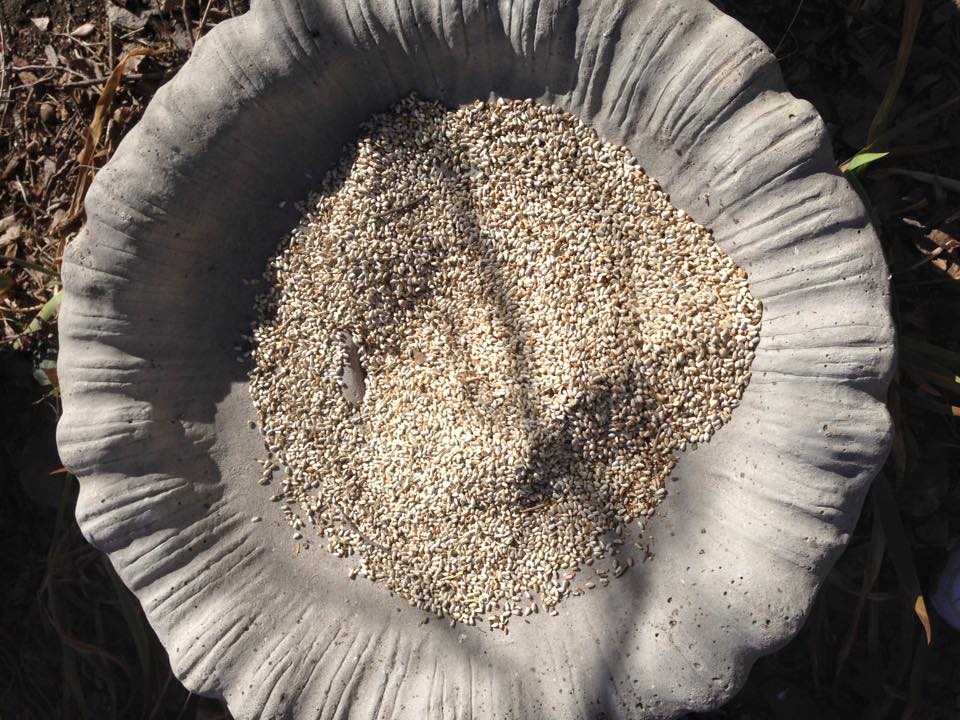
Feeding the Backyard Birds

Picked up some new bird feeders to add to what I already have.  This is my favorite part of the garden on these windy cold winter days...watching the birds is relaxing and somewhat therapeutic! My favorite back yard bird visitors are the cardinals!!!